

You got a standing desk to take care of your body and increase your energy output during the day.
However, if one stands on a hard floor for 6-8 hours, one has lost half of the investment!
Your feet ache by midday. The piece that is missing in your ergonomic setting is a good anti-fatigue mat to stand on while you work at your desk.
LiftDesk creates adjustable standing desks for all workaholics.
The correct standing desk floor mat cushions your feet, helps you make subtle weight changes, improves blood flow, and decreases physical fatigue from holding your weight up too early in your chair.
It is the number one most important accessory that you can make after buying your standing desk.
We list the 6 top anti-fatigue mats for standing desks in 2026.
Key Takeaways
- For the best anti-fatigue mat for standing, use a minimum thickness of 3/4 inch – thinner mats will compress too rapidly and won’t last to relieve fatigue.
- The high-density polyurethane foam lasts many times longer than the low-density foam in ergonomic anti-fatigue mats, and can sustain itself for 5-10 years, whereas the low-density foams last only 1-2 years.
- Any floor mat for a standing desk really is a must-have for having a non-slip bottom, as any mobility underfoot creates a hazard of tripping and compromises the comfort that it is supposed to bring to the standing desk.
- As well as anti-fatigue properties, kitchen and office anti-fatigue mats require stain resistance to withstand the dangers of food spills and regular use of the workspace without absorbing odors or tarnishing over time.
- The size is more important than people realize: a mat smaller than 20 inches will result in unnatural standing positions, which will diminish the ergonomic value of using a mat.
What Makes a Quality Anti-Fatigue Mat
Not all mats purchased as anti-fatigue mats can provide any real anti-fatigue. Knowing the distinguishing characteristics of useful versus marketing fluff enables you to make a more informed buying decision.
The density of the foam and material
The foam density will affect the shape stability of the mat with daily usage. Low-density foam is soft, but the compression is permanent – this means it will compress only in the first few months before it settles.
You’re left on a thin, flat pad that offers the same amount of cushioning as a bare floor.
The highest quality anti-fatigue mats are made with polyurethane foam that has a density of 1.8 lbs. or more per cubic foot.
Thickness
The relationship between the thickness and the fatigue relief is direct to a certain extent. Mats under ½” are not very soft or comfortable.
Most anti-fatigue mats for standing desks should be 3/4 inch thick.
The thickness provides good protection for the feet from the pressure of walking, while not causing any instability that makes it difficult to type or work accurately.
Non-Slip Performance
Not having a mat is safer than having a mat that is not stable. High-quality textured rubber or foam-backed floor mats for standing desks will anchor to hard floors and low-pile carpet.
Search for mats that have grip on various floor surfaces, not just smooth hardwood.
Surface Durability
Your mat’s top surface is in constant contact with the bottom of one’s shoes and the bottom of one’s feet during the work day.
Cheap materials scuff, tear, and discolor within a month; quality surfaces do not. Anti-fatigue mats are also needed in the kitchen and in an office because spills can occur in either.
Beveled Edges
Squared-off mat edges create a tripping hazard, which is avoided by beveled or tapered edges.
This is especially crucial in situations where you’re walking on and off the mat dozens of times a day in the office environment.
The beveled edges are also useful to minimize the tendency of the mat rolling up the sides, causing a tripping hazard as well as an uneven standing surface over time.
Top 5 Anti-Fatigue Mats for Standing Desks 2026
Testing at home offices, commercial workstations, and kitchen environments verified which mats successfully meet the criteria of comfort, durability, and usability throughout the day.
1. ComfiLife Anti-Fatigue Floor Mat
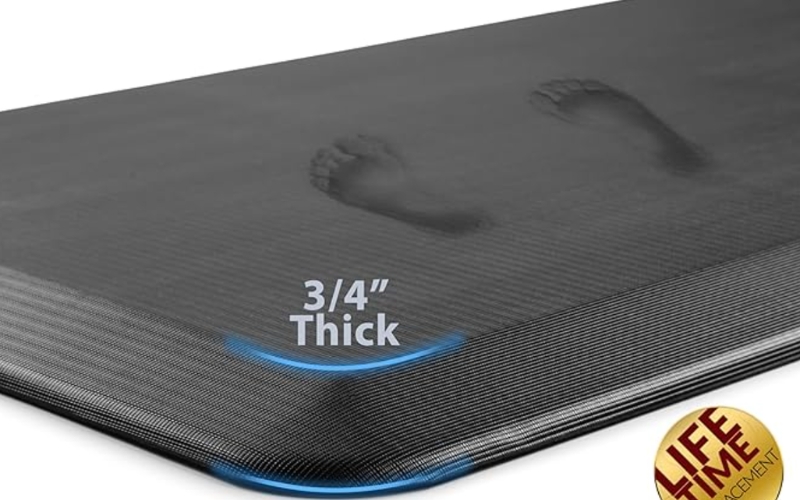
The ComfiLife stands as one of the most consistently recommended anti-fatigue mats for standing desks across independent review platforms.
The 3/4-inch thick construction hits the ideal thickness for fatigue relief without surface instability.
High-density foam maintains its shape through months of daily standing without the permanent compression that budget alternatives show quickly.
Key Specifications:
- Thickness: 3/4 inch high-density foam
- Size: 20″ x 32″ (multiple sizes available)
- Surface: Stain-resistant top coating
- Base: Non-slip rubber bottom
- Edges: Beveled perimeter
- Colors: Black; additional patterns available
Pros:
- 3/4-inch high-density foam provides consistent cushioning that holds up through daily use
- Stain-resistant surface cleans with a quick wipe rather than specialized cleaning products.
- Non-slip bottom stays firmly in place on multiple floor surface types
- Beveled edges prevent tripping when stepping on and off dozens of times daily
- Accessible pricing delivers genuine quality without premium cost
- Versatile design works equally well at standing desks and kitchen workstations
Cons:
- The 20×32 inch size limits lateral movement for users who shift position frequently
- Black is the primary, widely available color; pattern options vary by retailer
- Foam may show slight compression in high-pressure points after 12 to 18 months of intensive daily use
2. House of Noa Nama Standing Mat (Emile)
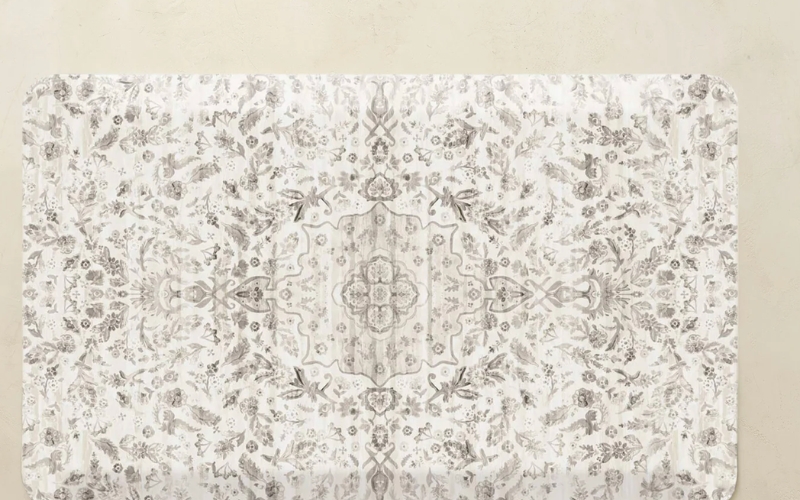
The House of Noa Nama breaks the mold of standard standing desk floor mats by combining functional ergonomic support with genuine aesthetic appeal.
The printed fabric top surface provides visual warmth that plain foam mats cannot offer, making it the natural choice for home offices where interior design matters alongside workspace functionality.
Key Specifications:
- Thickness: 0.75 inches
- Sizes: 22″x36″, 22″x52″, 22″x72″, 30″x108″
- Material: High-density foam with printed fabric top
- Accessibility features: None listed
Pros:
- Printed fabric top surface adds genuine aesthetic appeal, missing from standard office mats
- Four size options, including the 30×108-inch runner, accommodate diverse workstation setups
- 0.75-inch foam thickness delivers effective ergonomic fatigue relief throughout the workday
- Design-forward approach suits home offices where visual integration matters
- Extra-long runner sizes accommodate lateral movement and multi-person workstations
Cons:
- Fabric surface may be harder to clean than waterproof foam or PU-coated alternatives.
- The fabric top is not listed as waterproof, which limits its suitability for the kitchen splash zone.
3. Gorilla Grip Comfortable Cushioned Mat
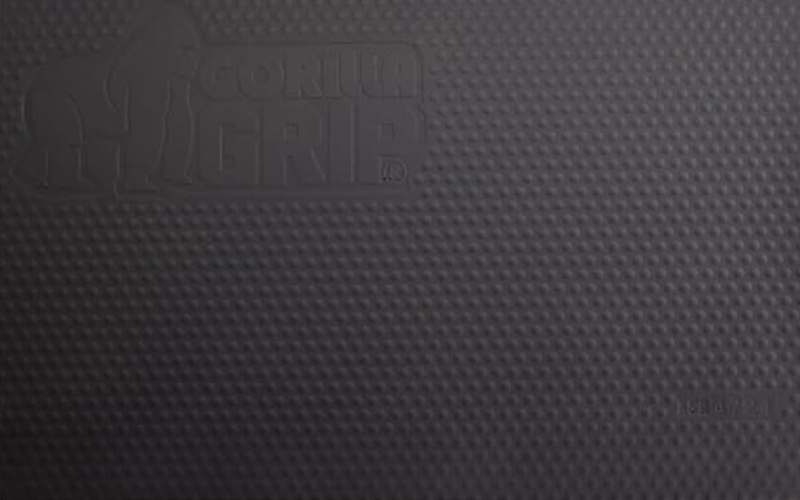
The Gorilla Grip delivers waterproof performance that fabric-top and basic foam mats cannot match.
The stain-resistant top surface repels liquid spills instantly, making cleanup a matter of a quick wipe rather than blotting or drying time.
This makes it the most practical kitchen and office anti-fatigue mat for users who genuinely use their mat in both environments across a single day.
Key Specifications:
- Thickness: 3/4 inch
- Size: 17″ x 24″ (multiple sizes available)
- Surface: Waterproof stain-resistant top
- Construction: Cushioned ergonomic foam
- Colors: Black
Pros:
- Fully waterproof surface handles kitchen spills and beverage accidents without damage or staining
- 3/4-inch ergonomic cushioning provides genuine ankle and foot support during extended standing
- Accessible pricing makes multi-mat coverage of kitchen and office stations budget-friendly
- Stain-resistant design maintains appearance through daily use in high-traffic zones
- Easy full cleaning with water rather than specialized cleaning products only
Cons:
- The 17×24-inch base size is narrower than the 20-inch minimum recommended for full standing desk use
- Limited color options compared to design-focused competitors
- Basic aesthetic suits functional spaces better than design-forward home offices
4. Sky Solutions Sky Mat Comfort Anti-Fatigue Mat
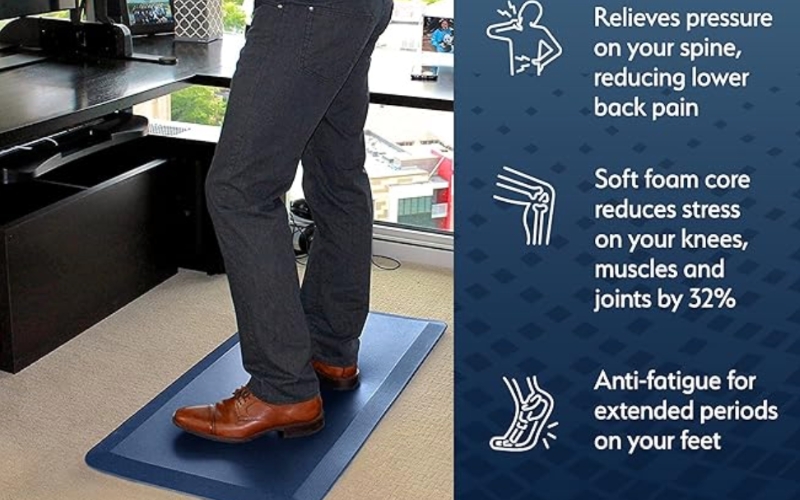
The Sky Mat earns consistent praise for its combination of practical features that frequent sit to stand desk users actually notice daily.
The 20×39-inch standard size provides more length than typical compact mats, accommodating the natural front-to-back weight shifting that ergonomic standing encourages.
Key Specifications:
- Thickness: 3/4 inch high-density PU foam
- Size: 20″ x 39″ standard (multiple sizes available)
- Surface: Diamond-pattern stain-resistant top
- Base: Non-slip padded bottom
- Shipping: Flat-packed to prevent creasing
- Use: Personal and commercial
Pros:
- 20×39-inch length accommodates natural weight shifting without stepping off the mat
- High-density PU foam maintains consistent thickness through months of daily use.
- Diamond-pattern surface resists debris and stain accumulation effectively
- Non-slip bottom grips both hard floors and carpeted surfaces reliably
Cons:
- Limited color range,e with black as the primary widely available option
- Some users report slight shifting on very smooth, polished hardwood floors
- No contoured or active-standing features for users wanting more varied foot
5. House of Noa Nama Standing Mat (Large Runner)
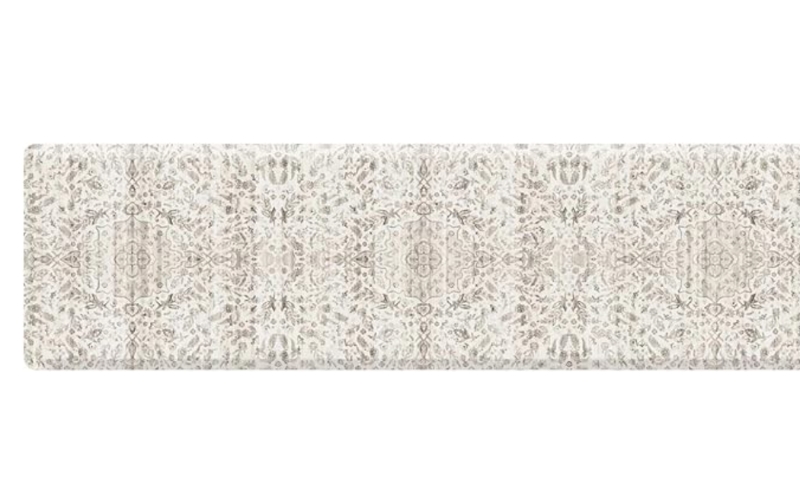
This extended runner format from House of Noa deserves separate consideration from the standard Nama sizes because it serves a fundamentally different use case.
At 30×108 inches, this mat provides nine full feet of standing coverage. No other mat in this category approaches that footprint.
Key Specifications:
- Thickness: 0.75 inches
- Size: 30″ x 108″
- Material: High-density foam with printed fabric top
- Best Use: Extended coverage workstations, kitchen islands, shared standing setups
Pros:
- 108-inch length provides nine feet of standing coverage unavailable in any comparable product
- 30-inch width accommodates wider stances and side-by-side shared workstation use
- High-density foam delivers consistent ergonomic support across the full mat length
- Fabric top integrates naturally into home office and open-plan workspace aesthetics
- Single mat solution for users who pace, move laterally, or share a standing workspace
Cons:
- Large footprint requires significant clear floor space that smaller offices cannot accommodate.
- Fabric surface requires more careful maintenance than waterproof alternatives.
Anti-Fatigue Mat Comparison Chart
| Mat Model | Size Options | Thickness | Material | Waterproof | Best For |
| ComfiLife Anti-Fatigue Mat | 20″x32″ and larger | 3/4 inch | High-density foam | Wipe-resistant | Every day, the home office and kitchen |
| House of Noa Nama (Standard) | 22″x36″ to 22″x72″ | 0.75 inch | Foam with fabric top | No | Design-conscious home offices |
| Gorilla Grip Kitchen Mat | 17″x24″ and larger | 3/4 inch | Cushioned foam | Yes | Kitchen and budget office use |
| Sky Mat (20″x39″) | 20″x39″ and larger | 3/4 inch | High-density PU foam | Wipe-resistant | Active standing with weight shifting |
| House of Noa Nama (Runner) | 30″x108″ | 0.75 inch | Foam with fabric top | No | Extended coverage and shared desks |
How to Choose the Right Mat Size
Size selection determines whether your mat actually supports the way you stand or simply occupies floor space beneath your desk.
Getting this decision right matters as much as choosing the correct foam density or thickness.
Width is the first dimension to consider. Twenty inches is the practical minimum for a standing desk floor mat because narrower mats force you to stand with your feet closer together than your natural stance.
That unnatural positioning increases ankle and hip fatigue rather than reducing it. Users with wider natural stances should look at 22 to 24-inch wide options.
Length determines how much front-to-back movement you can make while remaining on the mat. Users who stand in a relatively fixed position do well with 32-inch lengths.
Users who shift their weight forward and backward throughout the day benefit from 39 to 52-inch lengths.
Users who pace, take calls while walking in place, or share a workstation need runner formats in the 70 to 108-inch range.
Measure your available floor space before purchasing. Consider where your mat sits relative to your chair when you transition to seated work.
A mat that requires moving every time you sit down creates friction that discourages standing in the first place.
Mat Materials Explained
Material selection in ergonomic anti-fatigue mats affects comfort, longevity, and maintenance requirements differently.
Understanding what each material delivers helps you match your purchase to your actual daily use.
High-density polyurethane foam is the gold standard for standing desk mat construction and delivers the best combination of durability and fatigue relief. Here is what it provides:
- Returns to original thickness immediately after compression, maintaining consistent support across years of use
- Resists the permanent flattening that low-density foam shows within months of daily use
- Supports waterproof surface coatings that wipe clean easily without absorbing spills
- Maintains stable density across temperature variations in both office and kitchen environments
Fabric-top foam mats trade some practical durability for aesthetic warmth and design flexibility. These offer:
- Printed or textured fabric surfaces that integrate naturally into home office interior designs
- Warmer tactile feel underfoot, particularly in bare feet during work-from-home use
- Wider range of visual options beyond the black and grey palette of standard office mats
- Less resistance to liquid spills, requiring prompt cleanup to prevent moisture absorption
Memory foam mats provide exceptional initial softness but come with important trade-offs worth understanding before purchasing:
- Superior surface comfort during the first weeks of use compared to standard PU foam
- Slower rebound rate that can create slight instability during precise keyboard and mouse work
- Greater susceptibility to permanent compression in high-pressure spots over time
- Generally better suited to low-traffic kitchen use than intensive daily standing desk applications
Matching your material choice to your primary use environment ensures your mat performs well through daily use rather than feeling like a compromise within months of purchase.
Complete Your Standing Desk Setup Today
Your standing desk does exactly what it promises when you give it the right foundation to work from.
The best anti-fatigue mat for standing desk use eliminates the foot pain, leg fatigue, and back discomfort that drive people back to their chairs long before their bodies actually need a rest.
The right mat transforms standing from something you endure into something your body genuinely tolerates and benefits from throughout the workday.
Pair your standing mat with LiftDesk office manufacturer’s complete range of height-adjustable standing desks engineered for professional home and commercial workspace use.
Frequently Asked Questions
Do anti-fatigue mats actually work for standing desk users?
Yes, ergonomic research consistently confirms their effectiveness. Studies show anti-fatigue mats reduce lower limb discomfort by 30 to 50 percent compared to standing on bare hard floors.
How thick should an anti-fatigue mat be for a standing desk?
The optimal thickness for a standing desk floor mat is 3/4 inch. Mats thinner than half an inch compress too quickly under body weight to provide meaningful fatigue relief.
Mats thicker than one inch can create excessive surface instability that makes precise keyboard and mouse work uncomfortable and increases ankle fatigue from constant compensation.
Can I use a kitchen anti-fatigue mat at my standing desk?
Yes, most kitchen and office anti-fatigue mats work well in both environments when they meet the basic specifications for standing desk use.
Confirm the mat is at least 3/4 inch thick, at least 20 inches wide, and has a non-slip bottom before using it at a standing desk.
How long do anti-fatigue mats last before needing replacement?
A quality ergonomic anti-fatigue mat using high-density polyurethane foam lasts 5 to 10 years under daily use.
The clearest sign that replacement is needed is permanent compression in the center of the mat where you stand most.
What size anti-fatigue mat do I need for my standing desk?
Start with 20 inches wide as the minimum for comfortable natural standing.
Choose 32 inches for stationary standing positions, 39 inches if you shift your weight forward and backward regularly, and 52 inches or longer if you pace or move laterally while working.